
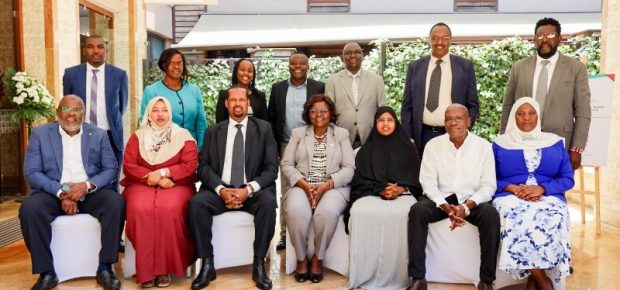
CRA Engages Senate on Vertical Revenue Sharing for FY 2027/28
On 5 October 2026, the Commission on Revenue Allocation (CRA) held a consultative meeting with the Senate Standing Committee on Finance and Budget on the Commission’s draft Recommendation on the sharing of revenue between the National and County Governments (vertical revenue sharing) for the Financial Year 2027/28.
The Commission was led by Chairperson CPA Mary Wanyonyi Chebukati, CBS, while the Senate Standing Committee on Finance and Budget was led by its Chairperson, Sen. (Capt.) Dr. Ibrahim Ali Roba, EGH, MP.
The meeting forms part of the consultations CRA is undertaking in developing its recommendation on vertical revenue sharing. Under Article 216(1)(a) of the Constitution, the Commission is mandated to make recommendations concerning the basis for the equitable sharing of revenue raised nationally between the National and County Governments.
Opening the meeting, CPA Chebukati underscored the importance of the engagement with the Senate in arriving at an equitable sharing of resources between the two levels of government.
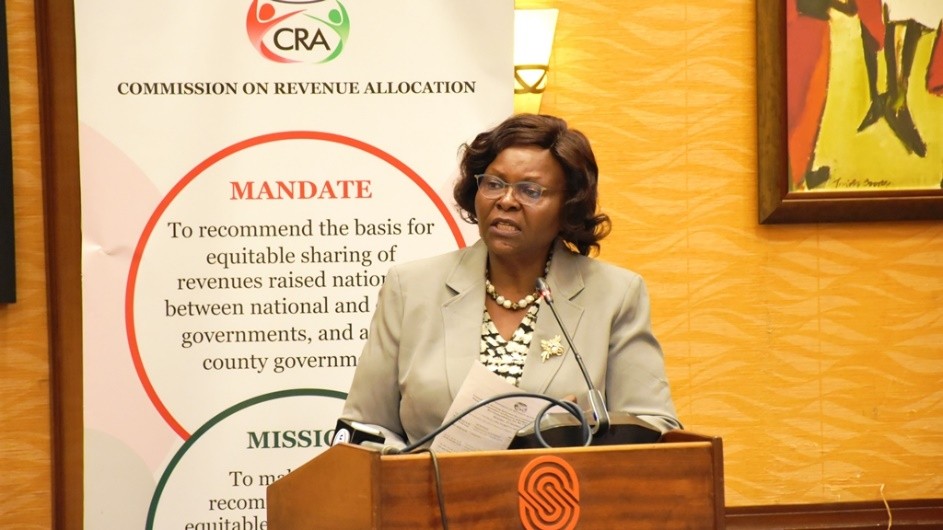
“The recommendation has taken into account the need to provide adequate resources for each level of government to finance functions assigned to them by the Fourth Schedule of the Constitution,” she said.
Economic and fiscal outlook shaping 2027-2028 revenue sharing
CPA Chebukati noted that the FY 2027/28 Recommendation is being developed against the backdrop of a challenging global environment, even as the Kenyan economy has remained resilient. She emphasised that the prevailing economic and fiscal environment must be considered alongside the need to adequately finance constitutional functions and sustain service delivery.
During the meeting, CRA presented its assessment of the performance of the economy, nationally raised revenue, public debt and the fiscal frameworks of both the National and County Governments. The presentation also examined the factors that continue to affect revenue mobilisation and expenditure.
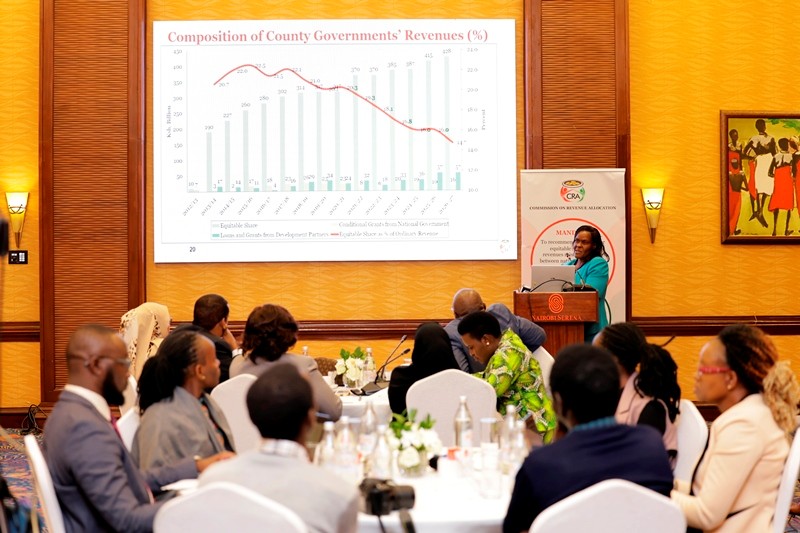
CRA noted that although ordinary revenue has grown over the years, collections have continued to fall below targets. In FY 2025/26, actual ordinary revenue amounted to KSh 2.588 trillion, compared with an initial target of KSh 2.755 trillion. The Commission further noted that revenue performance in FY 2027/28 could be affected by economic activity around the August 2027 General Election, based on revenue performance trends observed during previous election years.
Public debt was another key consideration. The Commission’s analysis showed that the stock of public debt stood at KSh 13.12 trillion at the end of June 2026, equivalent to 70.38 per cent of GDP. Debt servicing obligations continue to exert pressure on available public resources, with interest payments accounting for a significant proportion of ordinary revenue.
At the county level, the discussions examined the performance of Own Source Revenue (OSR) and the accumulation of pending bills. CRA’s analysis indicates that counties raised KSh 525 billion in OSR between FY 2013/14 and the first nine months of FY 2025/26 against a cumulative target of KSh 808 billion. County pending bills stood at KSh 156.84 billion as at 31 March 2026.
Senate reaffirms CRA’s role in revenue sharing
Chairperson of the Senate Standing Committee on Finance and Budget, Sen. (Capt.) Dr. Ibrahim Ali Roba, EGH, MP, emphasized the importance of consultation in determining how nationally raised revenue is shared and reaffirmed the Senate’s commitment to devolution.
“In making these decisions, we engage with many stakeholders and balance the competing considerations in the best way we can. If there is one institution that is as committed to devolution as CRA, it is the Senate,” Sen. Roba said.
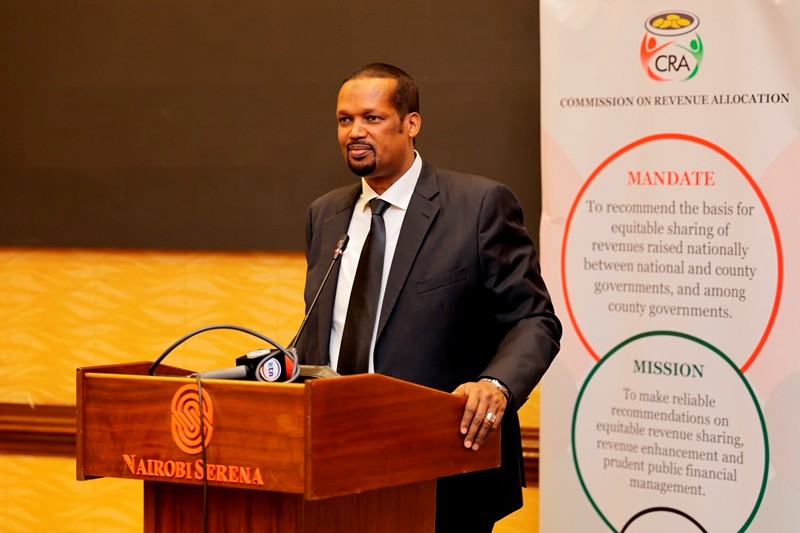
He acknowledged CRA’s central role in Kenya’s revenue sharing, noting that the it’s recommendations provide an important foundation for the Senate’s consideration and determination of revenue allocation matters.
“The role that CRA plays in developing these recommendations always forms the basis of the Senate’s discussions on revenue sharing,” he said.
Sen. Roba further highlighted the importance of CRA’s independence in developing its recommendations, observing that this enables the Commission to undertake its analysis objectively and make recommendations based on the fiscal and economic circumstances before it.
“As Chairperson, you are not susceptible to political forces. It is you and your team who make the decision and set the recommendations based on what you have considered and determined to be the best fit for the revenues available for sharing,” he said.
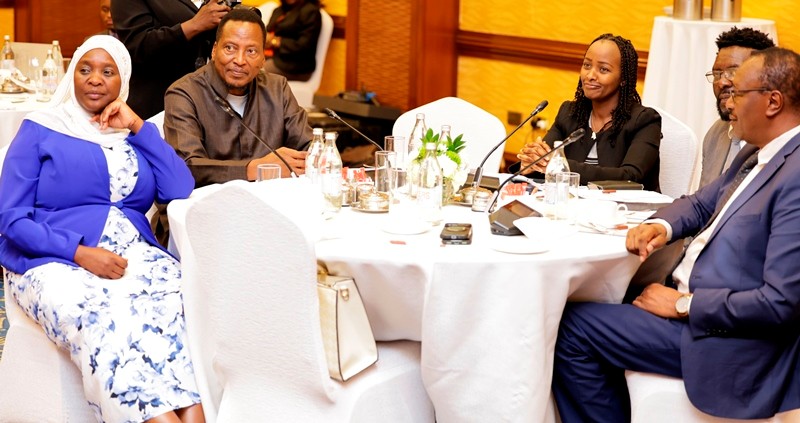
This recognition of CRA’s independence reinforces the constitutional design of the Commission as an impartial institution providing evidence-based recommendations to guide the equitable sharing of nationally raised revenue.
Financing of UHC workers
The Chairperson also drew the Committee’s attention to the financing of Universal Health Coverage (UHC) workers, an issue with implications for county financing in FY 2027/28.
For FY 2026/27, resources for the workers were provided as additional conditional allocations to County Governments. The Chairperson informed the Committee that the Intergovernmental Budget and Economic Council (IBEC) and the Summit, in consultation with County Governments, had resolved that the resources should subsequently be incorporated into counties’ equitable share. This, however, raises an important question regarding the current basis for sharing revenue among counties.
“For this to happen, the Fourth Basis for revenue sharing among county governments will have to be reviewed,” CPA Chebukati told the Committee, while seeking the Senate’s guidance on the practicality of undertaking the review before April 2027.
Pending such a review, CRA has proposed that remuneration for UHC workers continue to be provided as a conditional allocation to County Governments based on the payroll determined by the Ministry of Health and the Salaries and Remuneration Commission.
Building Consensus on Revenue Sharing
CPA Chebukati emphasised the Senate’s central role in determining equitable allocations to County Governments and the importance of continued consultation between the two institutions.
“As the Senate Committee which is mandated to determine equitable revenue allocation to the county governments, it is my hope that we can consult and agree on equitable share of revenue to both levels of government,” she said.
Chairperson of CRA’s Revenue Allocation Committee, Hon. Fatuma Gedi, CBS, stressed the importance of early engagement and consensus-building between the Commission and Parliament, drawing lessons from previous revenue sharing processes.
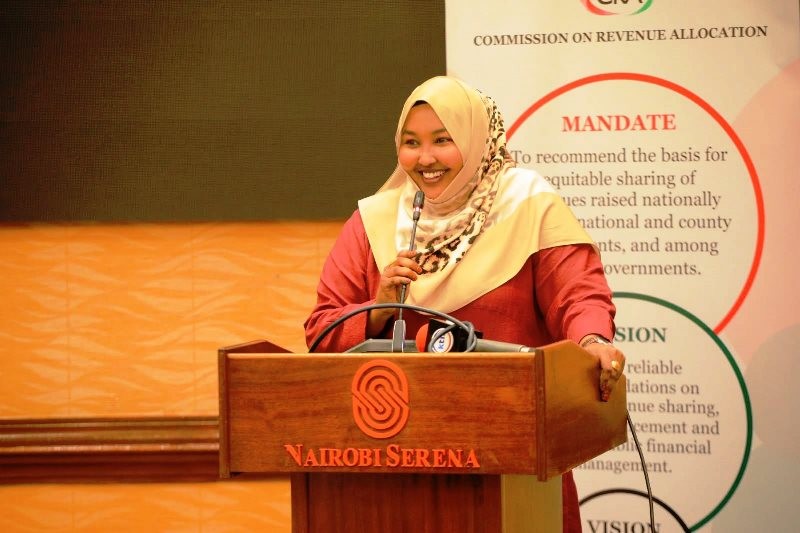
“From our past experience, CRA’s recommendations have ended up in mediation because the two Houses of Parliament did not agree between themselves and with the Commission,” Hon. Gedi said.
She urged the Senate Committee to work closely with CRA during the development of the FY 2027/28 Recommendation, particularly in identifying and addressing areas where the institutions may hold differing positions.
“We therefore urge the Committee to work with CRA so that we can harmonise the figures. Where there are issues, let us know so that we can address them and build consensus around the recommendations,” she said.
Hon. Gedi emphasised that early identification and resolution of areas of divergence would help build greater consensus around the final recommendations and reduce the likelihood of disagreements emerging later in the legislative process.
The FY 2027/28 Recommendation will be the 16th vertical revenue sharing recommendation prepared by CRA since the commencement of devolution in FY 2012/13.
The Commission will continue consultations with other key stakeholders before submitting its Recommendation by the end of October 2026, in line with the revised budget calendar for FY 2027/28.
