The Commission on Revenue Allocation (CRA) conducted a week-long series of stakeholder consultations from 8th to 12th June 2026 with stakeholders to collect their views on the Policy for Identifying Marginalised Areas, for Purposes of the Equalisation Fund, as mandated in Article 216(4) of the Constitution. The consultations that were part of the formative stages into the review process.
Speaking at the conclusion of the consultations, CRA Chairperson CPA Mary W. Chebukati, CBS, commended stakeholders for their active participation and valuable contributions to the review process.
She noted that the insights gathered would play a critical role in shaping a robust and responsive policy framework capable of addressing the evolving needs of marginalised communities while advancing the constitutional objective of equitable development.
“The review presents an important opportunity to reflect on lessons from previous policies and ensure that the next framework remains responsive to the needs of marginalised communities,” she said.
Since its establishment, CRA has developed two policies. The First Policy, developed in 2013, identified 14 counties as marginalised, while the Second Policy, published in 2018, identified 1,424 marginalised areas across 34 counties. Unlike the First Policy the used counties as unit for analysis, the Second Policy used subcounty as Unit of Analysis informing the difference in the two policies.
The Equalization Fund
The Equalization Fund is established under Article 204(1) of the Constitution and accounts for 0.5 percent of all the revenue collected each year based on the more recent audited accounts.
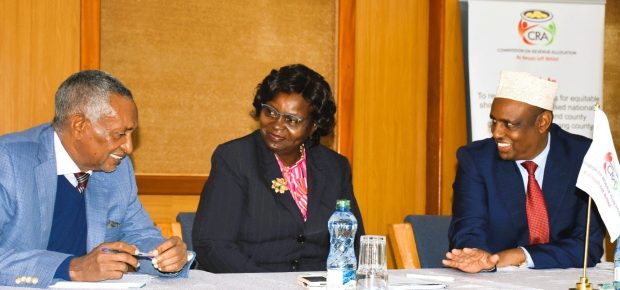
CRA Chairperson CPA Mary Wanyonyi Chebukati, CBS engages with Equalization Fund Board Chairman Ambassador (Eng.) Mahboub Mohamed and Governor Mandera County H.E Mohamud Mohamed Ali during Day 1 of stakeholder Consultations on 8th June 2026.
It was established to provide basic services: water, roads, health facilities and electricity to marginalized areas in order to bring the quality of services in those areas to the level enjoyed by the rest of the nation. The Constitution provides that the fund may be utilized either when approved in an Appropriation Bill or indirectly through conditional grants to counties.
Objectives of the consultation
Article 201(a) of the Constitution makes public participation in financial matters a requirement. It is on this premise that Commission prioritizes regular consultations with all key stakeholders. The recent consultations provided an opportunity for stakeholders to familiarise themselves with the of the First and Second Policies, assess strengths and limitations, and contribute proposals the review and eventual publishing of the Third Policy.
The engagements also provided a platform for discussions on the lessons learnt, success stories and areas of improvement in the Policy development and implementation.
Extensive stakeholder consultation
The week-long consultations brought together Governors, senior county officials, the Senate Standing Committee on Finance and Budget, the Senate Standing Committee on National Cohesion, Equal Opportunity and Regional Integration and Members of County Assemblies (MCAs) representing wards identified as marginalised under the Second Policy. The engagements provided stakeholders with an opportunity to share their experiences, views and recommendations to inform the review of the Policy.
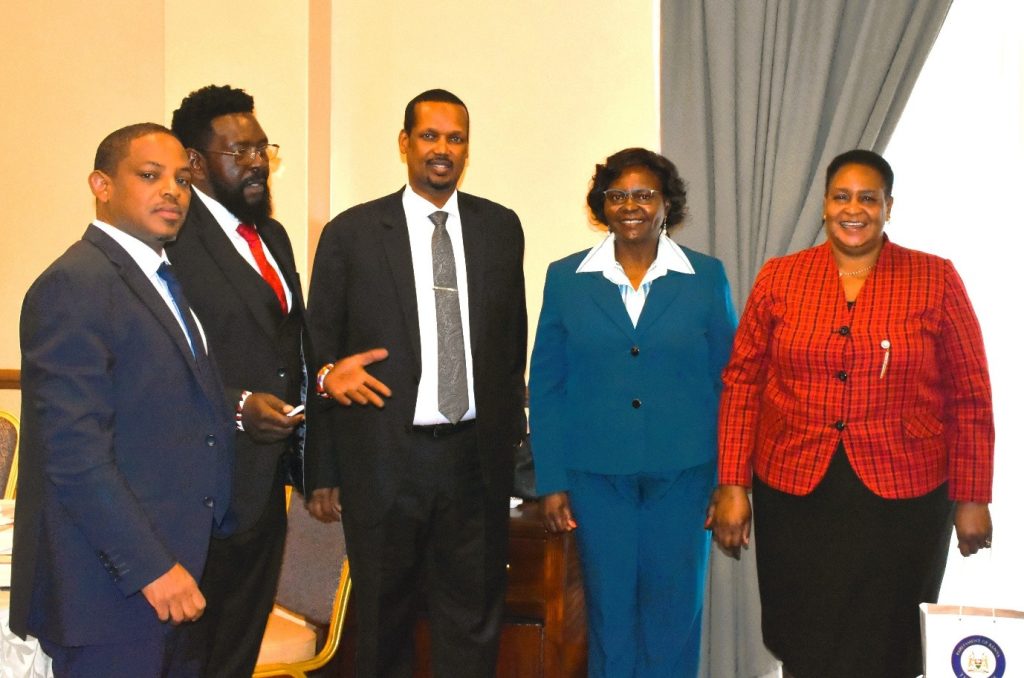
Senator Ali Roba Ibrahim, Chairperson of the Senate Standing Committee on Finance and Budget, and Senator Consolata Nabwire Wakwabubi during consultations with CRA on the review of the Policy Identifying Marginalised Areas
The consultations began with Governors from the 14 counties identified as marginalised under the First Policy and the 34 counties that benefited under the Second Policy. CRA also engaged the Senate Standing Committee on Finance and Budget and the Senate Standing Committee on National Cohesion, Equal Opportunity and Regional Integration before concluding with MCAs representing wards identified as marginalised under the Second Policy.
The review process builds on earlier consultations with the Equalization Fund Board. CRA will continue engaging additional stakeholders, including Members of the National Assembly, civil society organisations and the public, to ensure the revised Policy remains evidence-based, inclusive and responsive to the constitutional objective of promoting equitable development across the country.
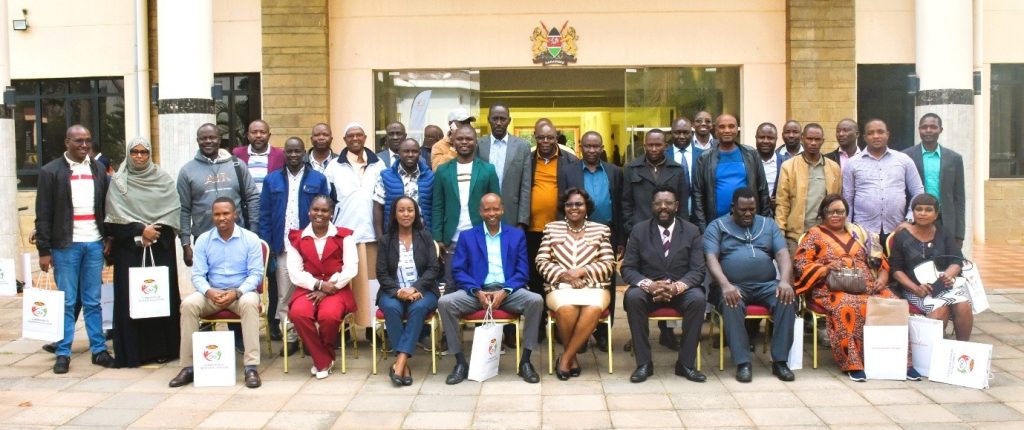
Members of County Assemblies (MCAs) representing wards identified as marginalised under the Second Policy.
The discussions focused on:
The criteria used to identify marginalised areas;
Experiences and lessons from policy implementation;
The effectiveness of the current policy framework;
Emerging challenges and gaps; and
Proposed measures to enhance the achievement of the Equalisation Fund’s objectives.
The consultations provided valuable grassroots insights into the implementation of the Policy, its impact on beneficiary communities and the challenges encountered on the ground. These perspectives will help inform the review process and strengthen the Policy’s effectiveness in advancing equitable development and improving access to basic services in marginalised areas.